Column · @smallshipgalapagoscruisesource
Why a Small Ship Galápagos Cruise Offers the Best Wildlife Experience
The Galápagos Islands have long held a special place in the imagination of travelers. Since Charles Darwin first set foot on these volcanic shores, the archipelago has represented a living laboratory of evolution, a place where nature operates on its own terms. But how you visit matters as much as why you go. A small ship galápagos cruise is not just a convenient way to see the islands; it is the only way to experience them with the intimacy and flexibility they deserve.
Most visitors arrive by plane at Baltra or San Cristóbal, then transfer to a vessel. The choice of boat shapes everything that follows: how close you get to wildlife, how many sites you can visit, how much time you spend waiting versus exploring. On a small ship with fewer than twenty passengers, the experience shifts from a passive tour to an active expedition. The Natural Paradise yacht, for example, carries just sixteen guests, which means every decision about the day's itinerary can be made on the fly based on conditions and wildlife sightings.
Why Size Matters in the Galápagos
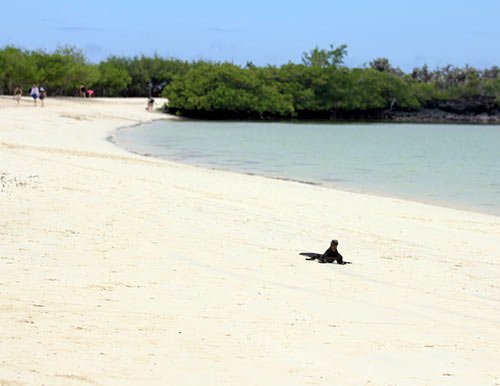
The Galápagos National Park strictly controls how many visitors can be at each landing site at any given time. Larger vessels, carrying a hundred or more passengers, must rotate their groups through a single site in shifts. That creates a conveyor-belt feel: you wait for your group to be called, you follow a flag, you get a set amount of time, then you leave. A small ship avoids this entirely. The entire group can land together, spread out naturally, and stay longer where the action is. When a marine iguana decides to bask on the trail, nobody rushes you past it.
This flexibility becomes especially valuable during peak wildlife moments. Sea lion pups might be playing in the shallows near the landing dock. A Galapagos penguin might be hunting for fish just off the rocks. On a small ship, the captain and the certified naturalist guide can adjust the schedule to let you watch. On a large ship, the schedule is fixed weeks in advance.
What a Typical Day Looks Like
A well-planned day on a small ship follows the rhythms of the islands. Mornings are cool and calm, the best time for hiking and wildlife observation. After lunch, the wind picks up, and afternoon activities shift to snorkeling or kayaking. This pattern is not unique to small ships, but the quality of the experience is. When you snorkel from a small vessel, you are often the only people in the water. The Galapagos green turtle glides past without any other fins in sight. A hammerhead shark might cruise below, visible because the water is clear and the group is small enough to stay quiet.

Kayaking offers a similar advantage. Paddling along the cliffs of Bartolome Island or into the coves of Genovesa Island, you move without engine noise. The wildlife pays less attention to you. Blue-footed boobies continue their courtship dance. Galapagos penguins dive for food nearby. The experience feels less like observation and more like being part of the scene.
The Islands That Define the Experience
Every island in the Galápagos has its own character, and a small ship can visit more of them in a single week than a larger vessel can. The itinerary often includes eastern and western sites that larger ships skip because of their draft or their need for deep-water anchorages. Fernandina Island, for instance, is one of the most pristine islands in the archipelago. It is also one of the most difficult to reach. The waters around it can be rough, and there is no dock. A small ship can anchor offshore and use pangas to land passengers on the lava rocks. Once there, you find marine iguanas piled on top of each other, flightless cormorants drying their wings, and sea lions resting on the black sand.
Española Island is famous for its colony of waved albatrosses, but it also offers some of the best snorkeling in the archipelago. The water is clear and full of fish. The sea lion pups here are particularly curious, often swimming right up to snorkelers. A small ship can spend the entire afternoon at this site, while larger vessels must leave by mid-afternoon to meet their schedule.
Santa Cruz Island serves as the hub of the archipelago. Most ships stop here to visit the Charles Darwin Research Station and the highland tortoise reserve. The town of Puerto Ayora is a good place to stretch your legs, buy a cold drink, and see how the local population lives alongside the park. But the real magic of Santa Cruz lies in its contrast: the dry lowlands give way to the misty Scalesia forest in the highlands, where giant tortoises roam freely.
The Role of the Guide
A certified naturalist guide is required on every Galápagos vessel, but the quality of guiding varies. On a small ship, the same guide stays with you for the entire trip. That guide learns your interests, your pace, your questions. By the third day, the guide knows whether you are the person who wants to photograph every finch or the one who wants to understand the geology of the islands. This continuity makes a real difference. A guide who has worked with the same group for several days can tailor the commentary to what the group has already seen and understood.
The best guides also know where to find the animals. They have relationships with the park rangers and the captains of other small vessels. When a pod of dolphins is spotted near Genovesa Island, the word spreads quickly. On a small ship, you can change course to investigate. That kind of spontaneity is one of the greatest pleasures of a small ship Galápagos cruise.
Snorkeling and Underwater Encounters
The underwater world of the Galápagos is as rich as the terrestrial one. Snorkeling from a small ship means you can enter the water at sites that larger groups cannot access. The coves of Bartolome Island are sheltered and full of life. The waters around Fernandina Island are colder but teeming with marine iguanas feeding on algae. The Galapagos green turtle is common at many sites, often seen grazing on seagrass beds. The sea lion colonies are famously playful. A group of juvenile sea lions might surround you, nibbling at your fins and rolling in the bubbles you create.
For those who want more adventure, the deeper waters around the islands hold hammerhead sharks and occasional whale sharks. These encounters are not guaranteed, but the chances improve when you are on a vessel that can move quickly to areas where recent sightings have been reported.
Kayaking and Quiet Exploration
Kayaking offers a different perspective. Paddling along the coast of Genovesa Island, you can peer into the lava tubes and crevices where seabirds nest. The island is sometimes called Bird Island for good reason. Red-footed boobies, Nazca boobies, and swallow-tailed gulls all breed here. The silence of a kayak lets you hear their calls without the hum of an engine. On a small ship, kayaks are launched from the mother vessel, and the group is small enough that everyone gets a chance to paddle without waiting for a turn.
Sustainable Tourism in Practice
The Galápagos Islands are a UNESCO World Heritage site and a protected national park. The rules governing visitor behavior are strict: stay on marked trails, keep a distance from wildlife, do not leave anything behind. A small ship naturally supports sustainable tourism because it has a lower environmental footprint. It burns less fuel, produces less waste, and disturbs fewer animals. The passengers also tend to be more conservation-minded, having chosen a smaller vessel deliberately. This creates a culture of respect that large groups sometimes lack.
The park limits the number of visitors to each site, and small ships help keep those numbers low. When you visit the same island as a group from a large ship, you notice the difference. The trails feel crowded. The wildlife is more skittish. On a small ship, you often have the trail to yourself. That solitude is not just a luxury; it is a better way to observe natural behavior.
Planning Your Trip
Choosing a small ship Galápagos cruise requires some research. The season affects what you will see. December through May is the warm wet season, with calmer seas and better visibility for snorkeling. The marine iguanas are more active, and the green turtles come ashore to nest. June through November is the cool dry season, when the Humboldt Current brings nutrient-rich water and more fish. This is the best time for seeing hammerhead sharks and large schools of rays. The weather is cooler, and the seas can be rougher, but the wildlife is abundant.

The length of the cruise also matters. Five-day itineraries cover the central islands and are good for first-time visitors. Eight-day itineraries reach the outer islands like Española and Fernandina. If you have the time, a longer trip gives you a more complete picture of the archipelago's diversity.
A small ship Galápagos cruise is not for everyone. It requires a willingness to be flexible, to share close quarters, and to follow a schedule set by nature rather than by a brochure. But for those who value depth over breadth, intimacy over spectacle, it is the best way to experience one of the most extraordinary places on Earth.